Archive for the 'archives' Category

Page 8 of 17

GEEZERS GONE WILD?

Igor Yopsvoyomatsky, Editor-in Chief of Paranoia is Fact.com,
answers readers’ questions.

Dear Igor,

Our son Noah invited us for our 40th Anniversary. We flew in from Boca with a big surprise for him. In the six months since we had seen each other we had each gone on  the South Beach Diet.  Cut out sugar, salt, fat and white flour. Dropped thirty pounds.

Sylvia became a “mat person” doing Yoga and Pilates daily along with beachwalking and Tai Chi with Mr. Dhong from the Zen Reinvention Center.  My trainer Rick got me on Creatine and pumped up my sessions to two hours a day.  Along with the protein smoothies, the Creatine makes me fart, loudly and frequently,  but  as Syl says, a little flatulence is a small price to pay.

We had some minor work. Botox to smooth the frown lines; collagen to plump the lips. I had a chin job, a “wattlectomy” Dr. Glattner called it; Sylvia had the sag sacks on the backs of her arms tightened. ” Saul,” she sobbed, I’ve got my elbows back.” Glattner resculpted her “boobies”  and scraped the cottage cheese off her butt.  He flattened my pecs and sliced that bouncy kanagaroo pouch off my scrotum. His partner  Iris, the senior sex therapist at the Sunnydale Complex prescribed  a nip and tuck down under for Syl and a Chinese enhancement operation for me. Now I smear on testosterone gel, pop a Cyalis and shoot up like a porn star. Sylvia calls me “Champ.” I call her “Nurse Ilsa.”  We do Boots and Booty, the Heiress and the Pool Boy, The Rabbi’s Revenge…Our neighbors say they can hear Syl moaning all over the complex. The other day we tried “Driving the Babysitter Home,” but got pulled over by the Highway Patrol. It had a happy ending, though: they let us off with a summons for defective muffler.

Well…We were so excited as we waited at Noah’s door. . 

But he blinked like he  didn’t recognize us. 

“Ta da,” said  Syl  with a cute little curtsy. “Whaddya think?”

He made that ugly  tantrum face like when he was sent to bed without dessert.  “What do I think? I tell you what I think. You look grotesque that’s what I think.”

Noah was irritable, like he was coming off a sugar jag. He’s  naturally jowly and gets that pear look when he noshes. 

“Is any of this covered by insurance?” he shouted. “Is this how you’re spending your grandchildren’s inheritance?”

Little Debbie was watching TV with M&M smears on her face. Hillary was nursing the twins. 

“My God Syl,” Hillary said, “your legs look like popsicle sticks.”

She’s getting those gray mop strings in her hair. Plus she’s starting to spread like peanut butter on toast. I remember when Noah brought her home to meet us. Syl watched her walk into the kitchen and whispered: “mark my words, Saul, that tush is gonna be a problem.”

Things got tense when we told Noah we didn’t eat franks or burgers anymore. Syl peeled the skin off her chicken and asked for some raw carrots and Vitamin Water. Noah caught me dumping my anniversary cake in the garbage.

All they talked about was money. Little Debbie is in pre school at Our Lady of Lourdes for $22K. 

“That’s what our spa cruise is gonna cost,” Syl said. “Sixteen days in the Caribbean. Classes, therapy, massage, ballroom dancing, catering by the top Vegan chefs…”

Hillary had to go on unpaid maternity leave for six months, but  her job has been eliminated in an acquisition and the new owners are not obligated to rehire her.

“I told her to do surrogate,” Syl whispered, “but she wanted to go in vitro and ends up with twins, no less.”

Noah’s insurance won’t reimburse routine pediatric exams. The roof sprung a leak during the storms, but their homeowner’s doesn’t cover  floods.

“All the condo owners paid an assessment on their units before the hurricanes,” Syl said. “Now our complex is fully protected and we had enough left over to build a jacuzzi by the pool.”

Noah got shrill like he does when he doesn’t get his way. ” You two are nothing but naval-gazing narcissists. Does it make you happy that Little Debbie might have to go to public school?”

“This is our time to live for ourselves,” Syl said. “We did our job as parents. We struggled.”

Noah exploded. “Struggled? On high school teacher’s pay? Summers off, private tutoring, cradle to grave insurance, public pension, Social Security?”

Little Debbie wrinkled her nose. “Grandpa made a big smelly,” she said.

“You should teach that child some manners,” I said.

Noah threw the door open. “You should stop eating so much celery.”

Syl cried all the way to the airport. “Is is possible, Saul? Can our own son be jealous of us?”

Is he jealous? Is this paranoia or fact?


Sincerely,
Saul and Sylvia,
Boca Loca, Florida.

Dear Saul and Sylvia,

It is fact. Not only was your son jealous, but he probably wished your plane would crash to stop you from depleting your estate. Your legacy is the  the only way for him to get his head above water. (That is, if you haven’t already disinherited him for Little Debbie’s fart joke.) As you fritter away his patrimony stop and consider: 

You are in Golden Age of Entitlement. Living on  public pension that was protected throughout the economic meltdown; collecting maximum Social Security; covered by Medicare and Union plan; enjoying savings you locked in thirty years ago. Your condo is paid for, you don’t owe a penny. You can spend all your money on yourselves. 

Your son is in the midst of life. What is he,  computer programmer?  Internet marketer? Digital film maker? His salary is stagnant; he’s lucky if he didn’t have to take a cut. He’s on some kind of mini care with a huge deductible and has to pay for supplement to cover his kids. His 401 K blew up in his last job. His wife was laid off. A Hedge Fund owns his mortgage and won’t let him refinance. By the time he retires the eligibility age will probably be 80 with chump change benefits. Medicare will be a death panel. He’ll have to hope Little Debbie or the twins can hit a tennis ball or be American Idol. And that they won’t resent him for deprived childhood he is inflicting on them.

You two remind me of my own father, his teeth should rot in his head. Forty years in Pinsk he drank two liters of vodka a day and smoked fifty Russian cigarettes, which is like sticking your nose in pile of burning sheep dip. Meanwhile, my sainted mother scrubbed floors in the Brest Executive Committee Headquarters. When she collapsed and drowned in her mop pail he came to Greenpoint to sponge off me. He went to Sobieski Senior Center and discovered he was victim of Soviet Sociopathology. He stopped drinking and smoking. Gave up potatoes, took spinning and aerobic kazatski. Now he shops with  hipsters at the Soil and Sea Co Op, six dollars for organic cucumber. He is having hot affair with Olga, a fat tart from Bialystok, spiked heels, peroxide, younger than me. My sainted mother left me her collection of Lithuanian serving spoons that she smuggled out of Odessa in her babushka. But he sold it to take his slyookah on spa cruise. Maybe it’s the same cruise you will be going on. I hope typhoon comes and blows the four of you overboard.

Your friend,
Igor
 

LINDSAY LOHAN: THE STORY CONTINUES

 Reprint from October 21, 2008

 NEBRASKA DUMPS LOHAN AND DUCKS SCANDAL

LINCOLN, Neb., Oct. 21…Red faced officials were scrambling today to explain why they denied Lindsay Lohan shelter under Nebraska’s Safe Haven Law.

“We’ve changed the requirements” said an official from the Department of Health and Human Services “She may be needy, but she’s no longer eligible.”

Lohan’s mother, Dina, brought her to Creighton University Medical Center in a Hummer Stretch yesterday and applied to have her declared a ward of the state. Social workers claiming patient privilege would not reveal the reason for the application, but the Safe Haven Law offers refuge to children whose parents can no longer cope with them for economic, social or medical reasons.

“I think her mom has had it,” a social worker who would not give her name confided.

Nebraska was the last of 50 states to adopt the Safe Haven law, which essentially allows parents to abandon their children without fear of prosecution. While most other states will only accept children up to the age of one year the Nebraska legislators, in an excess of altruism, removed all age limits.

“We wanted to offer the service to all hard-pressed parents and needy children,” says an official, then adds with a rueful smile, “but we had no idea how desperate so many people were.”

Within days of the law’s passage local hospitals were overwhelmed by parents from Nebraska and neighboring states seeking to place their children.

“We had a widower come in with his nine children and say he couldn’t afford to take care of them,” a social worker said. “Grandparents who couldn’t raise unruly teenagers. Children with social and emotional issues. Parents who said they couldn’t get treatment for their disturbed children and were now throwing up their hands.”

Ages ranged from 3 to 17, she said. But so far, Lohan, at 21, is the oldest they’ve seen.

“She’s not even a minor,” a state official said. “It’s a sad case, but we can’t help.”

Lohan, a former child star, has had many highly publicized brushes with the police. She has been arrested several times for drunk driving and possession of cocaine. Once she was charged with bringing a “controlled substance into a police facility,” which could have resulted in serious jail time. But the judge let her off with a one day sentence and community service.

Lohan has been in and out of detox over the last few years. “It is clear to me that my life has become completely unmanageable because I am addicted to alcohol and drugs,” she said, before entering Cirque Lodge Treatment Center in Sundance for her third attempt at rehabilitation.

Yesterday, Lohan’s mother, Dina, who is also her manager, hurried out of the hospital into the Hummer and drove back to the airport without speaking to the horde of reporters and paparazzi who had appeared minutes after her arrival.

Reporters peeking through a window saw Lohan sitting alone on a bench in the waiting room. They shouted questions, but she shook her head and turned away.

Lohan was born in New York City in 1986 and raised in Merrick, L.I. Her parents signed her with the Ford Model Agency at the age of three. Her Wikipedia entry states that “at first she found little work as a model, but persisted and eventually appeared in more than 100 print ads for companies like Toys ‘R’ Us.” She later modeled for Calvin Klein and Abercrombie and Fitch.

Lohan’s ambitious parents next steered her to television work. Again, after a few blown auditions she was hired for a Duncan Hines commercial and went on to do 60 more commercials, including a famous Jell-O spot with Bill Cosby.

From then on she never stopped working. In 1996 she won the role of Alexandra “Alli” Fowler on the soap opera Another World where, according to Filmbug UK ” she delivered more dialogue than any other 10 year old in daytime serials.”

“The girl was a workhorse,” says talent manager Fletch Pedlar. “She made a lot of money for the studios her parents, her agents, her lawyers, but nothing for herself.”

Between 1998 and and 2008 Lohan racked up 16 feature film credits, among them Disney hits The Parent Trap, Freaky Friday and Herbie Fully Loaded, winning an MTV award for Breakthrough Female Performance and a Teen Choice award for Breakout Movie Star. She became a full-fledged star playing a sexy teenager in Mean Girls, for which she won a Critics Choice, a Blimp Award for best new actress, an MTV Award for best Female Performance and five more Teen Choice awards. She worked with Robert Altman (Prairie Home Companion), Jane Fonda (Georgia Rules), taking time out to make 15 TV appearances, hosting Saturday Night Live three times. She recorded three solo albums and six soundtracks.

“She was an ATM,” says Pedlar. “But she finally broke down…It’s Judy Garland all over again, but it happened a lot quicker in this 24 hour news cycle.”

Lohan’s partying took its toll. She became unreliable, holding up productions with lateness and absences. When she did show up she didn’t know her lines, looked haggard and couldn’t focus. She was publicly reproached by studio head James Robinson for her lateness and irresponsibility on the set of Georgia Rules, but seemed unwilling or unable to reform. After a few losers she hit bottom last year with I Know Who Killed Me, a dismal horror movie for which she won the Golden Raspberry as worse actress of the year.

She stayed in the headlines with her arrests and relentless clubbing. Even added a new wrinkle, proclaiming her love for Lesbian DJ Sam Ronson.

But Lohan’s notoriety did not translate into box office success.

“If they can read all about you on the Internet they won’t pay to see you in the movies,” said Pedlar.

Her behavior made it difficult for producers to get insurance on her, always the kiss of death for dissipating celebrities. A prominent executive was quoted in Entertainment Weekly as saying Lohan’s career was over. “Right now she’d have to pay a studio to get herself into a movie.” Publicist Michael Levine said she was “unemployable for the next 18 months.”

Many bloggers said this trip to the hospital was another publicity stunt, but Pedlar disagrees

“For the first time since she was three years old she isn’t making money for the army of parasites that had grown up around her,” Pedlar said. “She’s just a crazy, self-destructive kid who needs help.

“So they dumped her.”

Late yesterday afternoon, Nebraska authorities rewrote their Safe Haven Law. “We need to get back to the intent of the law…the protection of newborns in immediate danger of being harmed,” said Todd Landry, director of Health and Human Services.

At the hospital social workers called Dina Lohan and told her to come back and get her daughter. As night fell, the chill of the oncoming Great Plains winter could be felt in the air. A social worker threw a blanket over Lohan’s shivering shoulders. Then, sat on the bench with her waiting for her mom to come.

AutoBARography 8: A NEW YEAR’S MEMORY


A RECENT EMAIL EXCHANGE


From: Krissy@….com
To: hgould@heywoodgould.com
Subject:  is that really you???

Wow, look at you! Got your own web page. Is that old man really you? Picked up some dents since ’75, but still got that crinkly squint, laughing at the world. Glad you’re alive.


From: hgould@heywoodgould.com
To: Krissy@….com
re: is that really you???

Thanks. Me too. Today anyway. Laughing now, but in ’75 that “crinkly squint”  was probably a hangover.


From: Krissy@….com

Not liking yourself so much back in the day, huh? Well, join the club. I get a hot flush every time I think of some of my escapades…


From: hgould@heywoodgould.com

Which were?


From: Krissy@….com

Vanity, Vanity, huh?  Thinking you’d remember me from a name after all these years. Krissie, the skinny blonde with overbite (since corrected.)  I used to come into Spring Street bar with my cousin, Charlene. We’d hang out and watch the show. Charlene was a big girl, loud laugh, really big drinker, never got drunk. “Here’s the lady with the hollow leg,” you would say. Charlene was really mortified the first time, but then she realized this was Soho, nobody judged. Anyway it kind of made her a celebrity, although she probably drank more because of it. 


From: hgould@heywoodgould.com

Still drawing a blank.


From: Krissy@….com

There was a redheaded cop named Phil. You bet him fifty bucks one night that Charlene could drink more beer than he could. She matched him fourteen  big liter  cans of Foster’s lager. He wobbled out banging into the walls,  and you declared her the winner. But then he came back and wanted to keep going. “I  just went out to take a piss,” he said. And you said “house rules: you can’t leave the field and get  back into the game.”  He waved his gun and said he was going to kill us all. And he pointed it right at you behind the bar.  And you said: “That won’t get you out of the bet, Phil.  You’ll still  have to pay my heirs.” He opened and closed his mouth like a fish, then slammed some money on the bar and stumbled out.  And you said you knew he wasn’t going to shoot you because  you were supposed to leave one chamber empty in a revolver. And anyway a smart lush like Phil probably unloaded his gun when he went out drinking. You tried to be nonchalant, pouring yourself a big shot of Martell. And I said: “you’re scared out of your mind.” And you whispered “don’t tell anybody,” which was funny because everybody saw you shaking like a leaf. 


From: hgould@heywoodgould.com

Doesn’t ring a bell. In those days weird things happened every night. 


From: Krissy@….com

I dug up a picture, maybe that’ll help. We were pretty friendly.  I came to NY to be a star. Remember you laughed when I said I’d played Juliet and Dorothy in the Wizard of Oz in high school in Tulsa. I get a hot flush thinking of what a pathetic little diva I must have been, although I guess we would have said prima donna in those days. I was uptown studying at Stella Adler and you said “she’ll bury you, she only likes the male students.” So I came down to Neighborhood Playhouse and you said Sanford Meisner would be mean to me and he was. So I got a job taking care of kids in a pre school and you said “you’re doing God’s work.” There was this actor who hung out at the bar who was in a play with Diane Keaton. And he said he was infatuated with her, but she was ignoring him, wouldn’t even say hello. They had this scene where he was supposed to slap her and he’d been doing a stage slap. And you said “give her a real hard Brooklyn smack, that’ll get her attention…” And he came in a few nights later, drunk out of his mind. You always said: “beware the guy who gets a head start in another store.” (You guys always called bars “stores” for some reason) And he was screaming: “you sonofabitch bastard dirty motherfucker. I took your advice. I slapped her so hard her lip started bleeding on stage. And now they want to fire me and she’s making an Equity complaint against me, you sonofabitch bastard, motherfucker….” And he jumped over the bar and tried to choke you and your partner Richard had to pull him off you. Everybody was laughing. But  you ran out after him, saying: “I’m sorry man, can I buy you a drink…”


From: hgould@heywoodgould.com

Is that one of those machine photos? It’s a little out of focus. 


From: Krissy@….com

Remember when your first novel came out? You  said  “I’m only writing books to tide me over until I  get a good bar job.” You were supposed to be very nonchalant about your art in those days. Not to take yourself seriously. You had three copies that night. I said I wanted one. “You’ll have to earn it,” you said. 


From: hgould@heywoodgould.com

I think I’m about to get one of those hot flushes.


From: Krissy@….com

You poured  me a split of champagne with a couple of shakes of bitters. I never drank anything but beer and this was gooooood!   After closing we went to this diner across from Bellevue Hospital where the waiter gave you tons of free food for a twenty dollar tip. You had a room at the Martha Washington Hotel in the ’30′s.  It was like a horror movie, dark and creaky, old people in the lobby at 4 am. It was the smallest room I ever saw. The radiator was banging. As soon as the hot air hit me it all came up–the champagne, the eggs and bacon and rice pudding –everything. I was in this tiny bathroom and I knew you could hear me retching and shitting. Oh God, I just got another hot flush. I didn’t want to cry because everybody laughed everything off in Soho in those days. You said: “I know I’m not a great lover, but I never made a woman puke before.” You opened the window and the cold air came in. You had this Slippery Elm Bark tea, or something.  It put me out like a light. When I woke up you were watching the new cable station. “It’s a Cagney festival,” you said, really happy. We watched Cagney movies all day and then the basketball game came on. “James Cagney and the Knicks,” you said. “This is a day to remember…”


From: hgould@heywoodgould.com

Not by me. Well, at least  I remember the room. It was a short crawl to the bathroom. You could reach the TV, radio, little refrigerator, toaster and  hot plate without getting out of bed. One of those old people left the hot plate on one night and that was the end of the Martha Washington.


From: Krissy@….com

Once at 8:30 I was waiting for the bus to take my kids up to the Museum of Natural History and you walked right by without seeing me. You were as gray as a tombstone, smoking a cigarette. So close I could see the white crust on your lips. But I didn’t want the principal to see me talking to you, I was such a little Miss Prim…


From: hgould@heywoodgould.com

Gray as a tombstone. Think I’ll steal that.  


From: Krissy@….com

 There were these three Colombian guys, who had leather jackets and watches and jewelry.  You called them “los tres majos” like the Three Wise Men in the xmas story. You guys guessed they were drug dealers probably doing business with the mafia in Little Italy. “Chocolattes, amigo,” they would say. You poured  cognac, creme cacao and heavy cream over ice and sprinkled nutmeg.  They loved it. “Cheap Brandy Alexander,” you said. “They think I just invented it. Like the Connecticut Yankee in  King Arthur’s Court…” They were always sliding rolled up bills across the bar. You would go into the little wine closet behind the bar and come out all glassy-eyed and light up a cigarette. New Year’s 1976 the bar was like rush hour. People passing drinks and money like at a baseball game. At 4:30 in the morning the place was still jammed. You were at the door yelling: “party’s over, everybody back on their head,” which was the punch line of some old joke. Finally, you got everybody out. The Three Wise Men were piling mounds of coke right on the bar. You were laughing and shaking your head. “No podemos aqui. Felice anno, amigos y adios…” They were so loaded they dropped a full bill on the way out. This bartender Louie who was in Andy Warhol movies got a straw and started snorting the floor, getting dust and ashes up his nose. It was too much for me so I left. The Three Wise Men were jumping around in the snow. One of them grabbed me, but another guy said: “es la pequenita del barman…” They gave me a dollar bill: “Happy New Year flaquita.” You had already locked the door, but you let me in. I was pretty disgusted.  I put the dollar bill on the bar. Everybody gathered around as you opened it. “It’s the size of a golf ball,” Louie said. I just walked out. I  was sure you guys were all going to die.


From: hgould@heywoodgould.com

 Some of us did. I decided to wait for natural causes. I’m a grandpa now. Even cigarette smoke makes me nauseous. Happy New Year.


From: Krissy@….com

I’m a grandma. Happy New Year to you!


AN INTERVIEW WITH HEYWOOD GOULD

Nightbird Publishers interviews Heywood Gould about his new book SERIAL KILLER’S DAUGHTER and about his life as a writer 

PART 2


HOLLYWOOD


Will we be seeing another Heywood Gould project on the big screen soon?

Hope springs eternal. There’s been some early interest in SERIAL KILLER’S DAUGHTER.

 
Do you miss Hollywood and the director’s chair?

Yes. The best thing about directing is you’re not writing, but you have a good excuse. Also, a driver picks you up and takes you home. You have your own trailer where you can nap undisturbed. You’re allowed to cut the lunch line. The crew guys call you “sir,” and pretend to be impressed with everything you say. As a writer you’re an object of disdain. As a director you have the illusion of being in control.   I can’t say enough terrible things about the movie business. How harshly you’re exploited. How your work is cheapened; by illiterates who take credit for your success and blame you for their failure.  The way the valet parker somehow knows you’ve had a flop… But I would drop everything to make another movie. Any movie. Anywhere…

 
Who were some of your favorite actors you have worked with on your films?

The ones who knew their lines and did what they were told, which means the day players and character actors. It was fun watching the big stars at work. Peck, Olivier, Newman, Cruise—they really are larger than life. There were some who understood the script— Bill Devane, Elizabeth Shue, Brian Brown, Jon Seda, Rachel Ticotin. Richard Portnow, John Capodice, among others–and said the lines exactly the way I heard them in my head.  In the beginning I would become frustrated when an actor’s portrayal didn’t match my conception. But, after a while I realized that the character changes from page to screen and an actor can rightfully claim ownership of the person he/she is playing. You hope for the best. 

 
How does the process of writing a screenplay differ from the process of writing a novel?

A screenplay is the characters and the story. A novel is authorial presence, ideas, language.A novelist agonizes over every word. The screenwriter has a few automatics—“Interior, Exterior, Fade In, Dissolve To—and all-purpose phrases—“the car explodes,” “she moans with pleasure, “the wizard turns into a hissing dragon,” “Will Ferrell drops his pants” etc.  A screenplay doesn’t require elaborate, eloquent scene setting, back story, insight …But that doesn’t make it easier to write. A screenplay that someone has labored months over will usually be read in one sitting over a Starbucks frappacino by a frazzled assistant who has to write reader’s reports on five more scripts by the end of the week. Most people in the movie business don’t know how to read a script so it has to be as novelistic as possible. The scene and character descriptions have to be vivid and concise. Some idea of the “attitude” of the movie is necessary, along with simple explanations of motivation and action. The entire script has to have a hypnotic pace that keeps the reader’s jaded attention. The novelist can learn from the brevity and focus of film dialogue. The screenwriter can learn from the airtight plotting of a good novel. Screenwriters should notice that most great movies were made from novels.


PERSONAL


You’ve lived on both east and west coasts, what do you like best about each?

In California you can go skiing in the morning and surfing in the afternoon. I did neither. In NYC you can you can hear great jazz and get mugged outside the club. I did both. In Cali some guy can decide you cut him off on the freeway and blow your brains out.  In NYC the train you were taking to Brooklyn can end up in Queens, leaving you freezing in a crack war zone waiting for the shuttle that never comes. The weather’s not so great in Cali. New Yorkers aren’t half as smart as they think they are. I lived in Cali for nineteen years and never went to the beach. I was born in NYC and have never been to the Statue of Liberty or the top of the Empire State Building. The Mexican food is better in Cali. The Italian food is better in NYC. In NYC the literati can decide you’re just a hack. In LA the whole town can suddenly decide —as if someone sent out an e-mail blast– that you’re not bankable. You pick your poison.


Who inspires you?

James Joyce, who went days without eating. It took him years to find a publisher for “Dubliners,” and then the printer refused to print it because it had a few “bloody”s in it. Fitzgerald who died broke in Hollywood convinced he was a failure. The Russian writers– censored, exiled, murdered. The contemporary Chinese writers– muzzled. The Cuban poet who was imprisoned for twenty years.  All I have to whine about is some editor/producer/critic/reader who doesn’t understand how great I am. And boy do I whine.


Tell us about your military experiences. It’s well known you were a reluctant warrior during the Vietnam conflict. How did you end up being drafted? What kind of action did you see? Did that experience shape your storytelling in any way?

I’m working on a short book of comic (I hope) memoirs about being drafted. The world will have to wait with bated breath.


What do you like to do when you’re not writing?

Sit around and beat myself up for not writing.


If you weren’t an author, what would you be?

A very bitter person in a job I hated. Although lately I’ve been thinking I might like to raise goats.


AN INTERVIEW WITH HEYWOOD GOULD

Nightbird Publishers interviews Heywood Gould about his new book SERIAL KILLER’S DAUGHTER and about his life as a writer 

PART 1

What actors do you envision playing the leads, Peter Vogel and Hannah Seeley, in the movie version, should there be one?

I’d like Montgomery Clift and Donna Reed, but don’t think they’re available.

Do you write every day? What does a typical writing day look like for you?

I try to write five days during the week and a half day on Sunday if there are no good football games.

Of your overall writing time, what percentage is new writing and what percentage is rewriting and editing?

I start the day by rereading what I wrote the day before. Sometimes I hate the stuff. It’s either incoherent or glib, clumsy or cheaply facile. A repeated word or a grammatical mistake can throw me into a panic. A flaw in logic or a key omission makes me Google “Symptoms of Dementia,” all of which I discover I’ve had since childhood.  Then I begin to rewrite—what choice do I have?  That can sometimes take a whole day and can affect the new stuff I had planned so I go back even further to clip off any loose ends. A different story begins to emerge. The story that was meant to be.

            As all other Gods have failed I’ve gotten mystical about the writing process. I no longer see myself as a creator, bringing something new into the world, but as an explorer on a voyage of discovery. Rewriting is a course correction to get to my El Dorado. It’s out there fully formed shimmering in the sun, —the perfect noir best seller with a huge movie sale.

The face of publishing appears to be changing. Where do you see it going over the next 5-10 years?

E-books obviously. But I think younger readers will discover the joy of the printed book; I see more people reading on the NYC subway than ever. The big houses will follow the big movie studios and aim for the mass audience. Small publishers who can operate on low overhead will become more influential. I think you’ll see most of the NBA, Pulitzer, Edgar, Hugo, etc. winners coming from the independent publishers.

How do you build strong characters in a novel, and which is your favorite character that you created? Any characters of your creation that upset you and made them difficult to keep writing about?

The fun of writing is when you start to “read” your characters. When they acquire a life of their own and you become a stenographer taking down their stories.  I’ve found most of my characters—even the bad guys—interesting and fun to write. But I was appalled by Arnold Seeley, the murderer in Serial Killer’s Daughter. He’s the first totally evil character I’ve ever written and I wondered in what depths of my brain he had been lurking. His scenes were the most difficult I’ve ever written. I felt like Dr. Frankenstein: why was I dredging this monster up?  But, in the same book I found two innocent young lovers who create an Eden in the back seat of a Volkswagen Bug traveling up and down the 101 Freeway. I finished the book with a darker view of humanity. But, paradoxically, with a greater appreciation of the redemptive power of love.

What do you like to read?

I read to become a better writer. To quote Norman Mailer: “To see how the other guys pull their jobs.” I read the Bible every day before writing as a constant lesson in how to tell a vivid story in simple language. Also, the Bible is uncanny in the way a name mentioned in Genesis, pops up in later books; how a story in one book lays the groundwork for an event in another. Some people would say that God, the author, used divine logic. I’d rather think that some human redactor (with God-given talent, of course) went through all the writings, paying off characters, resolving stories and tying up loose ends. I try to read writers who are better than me; you can easily pick up bad habits from the hacks. The great novelists can teach you how to tell a story. The great noir writers—Chandler, Simenon, Hammett and a few lesser known masters like Kenneth Fearing, Jonathan Latimer, Steve Fisher and many others to teach how to create atmosphere and suspense.   History and biography show how lives seem to meander, but are really driven by the logic of events. To make the coincidental and the unlikely seem inevitable is the great challenge of fiction writing.

Many of your novels are noir and depict the seedy underbelly of society. How did you decide to write this genre?

I grew up a few blocks away from the mother of famed bank robber and perpetual prison escapee Willie Sutton. She was a trembly old lady prowling the streets with a market basket, but she walked in an aura all her own. People pointed her out, told stories about her, but left her alone. I was eleven and consumed with curiosity. One day in the butcher store I asked her: “Are you Willy Sutton’s mother?” She smiled. “That’s me.” She seemed to want to talk, but when I got outside the butcher came after me in his blood spattered white coat and gave me a hard shove with his cold, beefy hand. “You bother that lady again, you’ll get a smack.” That was my first inkling that there was a secret world in my neighborhood that the butcher and Willy Sutton’s mom were part of and I was not.  From then on I’ve been fascinated with life in the alternate universe of crime.

What new projects are you currently working on?

I’m working on a thriller about a poetry-writing, pot-smoking detective in Santa Monica. Also, a musical version of a movie I wrote called “Cocktail.”

What do you like the best about writing, and what do you like the least?

I hate writing. Oh yeah and I guess I love it, too.  I love finishing something, but I hate reading it over and seeing how far it has strayed from the original conception. I love getting paid for what I’ve written, even if it’s only a few dollars. But I hate the nagging feeling that the publishers and producers are ripping me off. I love the elation when I get off a good line,  but hate the deflation at a cliché that has somehow gotten into print. I was once haggling with a producer about a screenplay fee. “I’m doin’ you a favor payin’ you at all, “he said. “You’d do this thing for nothing and you know it…” That about sums it up.

Do you have a personal favorite of the books you have written? How about a favorite Heywood Gould screenplay/movie?

There’s good and band in all of them. The good stuff seems like it was written by someone else. As if I went into a trance and it was dictated to me.  The bad stuff is all too recognizable as mine and mine alone.

What kind of research do you do for your crime novels? FORT APACHE, THE BRONX is especially gritty and real. Have you participated in ride-alongs with cops on their beats to get that sense of reality?

I covered police for the NY Post in the ‘60’s. With the anti-war demos, the drug busts, the Mob hits and the street crime there was enough action in one night for a hundred scripts. Ride-alongs were inconceivable. The cops didn’t want any reporter to see how they really did their jobs. Anyway, there’s something voyeuristic about Ride-alongs—like watching the animals from a Land Rover. And they’re unproductive. You get the official version, but people in the street won’t give you the straight story with two cops standing behind you. If you want to write about a neighborhood you shouldn’t be afraid to venture into it alone. Go to the scene, nose around. People are brimming with the great unarticulated drama of their lives. You’ll find somebody who wants to talk.

The Fort Apache characters were loosely based on two Bronx cops, who had a wealth of great stories and great humor about the job. They made writers undergo an initiation, taking them on a tour of the Bronx bars and if they were still conscious, dropping them in “hooker central” outside the Bronx Zoo. Two guys had washed out before me. But I was working as a bartender, drinking a quart of Martell a night. I was in training. We went shot for shot for hours.  When the cops started to fade I saw my chance. I bypassed my mouth and threw the last four rounds over my shoulder. They were too drunk to notice. When we pulled up outside the zoo and the hookers rushed the car, I asked: “Is this on you guys?” Cops are famously cheap. They sped away. I got the job.

Tell us about your early days as a writer. Was it difficult for you to get published? Do you have a few “trunk” or “apprenticeship” novels that never saw print?

I have scores of short stories and half-finished novels that were rejected. Several plays and at least twenty screenplays that will never be produced. It’s like being a baseball player: a .300 batting average is pretty good. My first published books were non-fiction and were like longer, more detailed versions of the stories I had done as a reporter. Fiction was harder to write. There was no template. Every story demanded its own kind of telling.  A dull reporter can write a competent story if the subject is interesting. A dull novelist will write a dull novel because in the end  subject of every novelist is him/herself.

Your memoir, CORPORATION FREAK, about your experiences workig as a consultant for IBM, is hilarious and insightful. The corporate mindset is a frightening  thing, right? Tell our readers about those days at Big Blue…the highs and the lows.

Random thoughts of an office worker staring out of the window of a suburban industrial park on a spring day. Economic life in the so-called “developed world” is based on the production of useless artifacts. All we really need to do is eat, sleep, stay warm and have sex, but a race of aliens have enslaved us to their vanity–the bosses. We have no share in the wealth we produce for them. They use faith, patriotism and fear to keep us in line. What if we tore everything down and gave everyone a plot of land? We could raise our own food, sing songs and stay out of the rain. Life would be simple. We would be happier. But the bosses wouldn’t. Those crummy bastards. This whole capitalist/corporate/consumer culture has been created to serve their urge to dominate their fellow human beings. You can see it in the parking lot. The gleaming SUV’s of the bosses, the modest, crumpled sedans of the drones. The big houses, the manicured lawns of the bosses, the crumbling bungalows and brown patches of the workers. What is jewelry? Why do I have to languish in a thankless job so some power-mad pervert can buy his wife a diamond necklace? I’m like a stoker, sweaty and grimy, shoveling madly to fuel the furnace of their greed. How come their kids are so sleek and talky when mine are sulky and always have running noses? Let’s rise up.  Overthrow the whole rotten system. Burn their cars, rip the diamonds off their wives’ necks, give their snotty kids a timeout. Let’s put ‘em against the wall, the dirty sonsabitches. Nobody’ll miss ‘em—not even their own families. …Oh, look at the time…It’s almost lunch…They day’s half over…And tomorrow’s casual Friday…

To Be Continued…Part 2 HOLLYWOOD

AutoBARography 5: A HIPSTER’S THANKSGIVING

Reprint from Nov. 2008

Soho, 1974 BC, Before Coach…(Prada and Gucci.) Old cast iron buildings, half sweatshops, half artists’ lofts. $500 a month gets you 5000 feet of raw space.

Spring Street Bar, the hippest place in the city, just ask us. On a good night you can see Johns and Cage, Raushenberg and Cunningham. Richie Serra comes in to punch people out, Andy Warhol shows up with his entourage after a Castelli opening. John and Yoko nurse beers. There has even been a “Clyde” Frazier citing.

But on Thanksgiving everyone dutifully turns into good little bourgeois and eats turkey en famille. Restaurants offer special menus, but only tourists and those with parents in elder care show up.

It’s the slowest and most hazardous day in the bar business. There’s no money to be made and you risk mutilation at the hands of some resentful reject who is drawn in by the lights. There had been a bit of a rush around noon as the locals fortified themselves for dreaded dinners. But now at 3:30 it’s dead. I’m using a lemon to show Mei, the Chinese busboy, how to throw a knuckleball when a guy in a green car coat slides in at the end of the bar.

He answers before I can ask. “Any kinda beer.”

People who don’t care what they drink just want to get loaded fast and act out their drama. This guy is white and blotchy with a sloppy red comb- over that starts under his ear and hardly covers his freckled bald spot. He’s got a blunt chin and a fighter’s caved-in nose. His watery blue eyes seem focused somewhere else even when they’re looking right at you. He’s the kind of holiday wacko who sets the alarms off , but for some reason I’m not concerned. He raises his glass. “Cheers, fellow outcast…”

I never speak to customers, even regulars. “No confessions please,” is the standard line. But the holiday has loosened my defenses. I pour myself a Remy.

“Cheers.”

He chainsmokes and stares into his beer while I chug Brandy Alexanders at the service end. When I go to empty his ashtray he puts down a fifty.

“Is there a magic cocktail that’ll put me in a festive mood?”

“Nothing that works on a holiday,” I say. “Holidays are God’s way of telling us we’re having too much fun.”

It’s a half-smart gloss on the cliche mantra of the decade: “Cocaine is God’s way of telling us we have too much money.” But he looks up at me like it’s the Sermon on the Mount.

“That’s really true, man,” he says. “Christmas is a total ordeal, too. Nobody ever gets what they want…”

“Because what they want can’t be bought in department stores,” I say. “Like the song says: All I want for Christmas/Is my two front teeth. But they’re lost forever like your youth and your innocence…”

He slaps the bar “That’s so profoundly true, Man. Christmas in a nutshell. But look at New Year’s. It starts out so great, but ends in disappointment.”

He wants a guru. Not usually my thing, but for some reason I rise to the bait. “That’s because people aspire to an ecstasy that is only available to the insane.”

“Then let’s get crazy,” he says. “Let’s have a double Bacardi 151.”

It’s the strongest booze in the house, 75% alcohol. I never touch it, but now I’m filling two rocks glasses. My new best friend throws down his drink with a practiced flip and waits for me. I follow suit. The rum burns a flaming trail of lava from my throat to my rectum.

“There’s three houses I”m not welcome in,” my pal says. “My parents, my ex wife and my girlfriend who just threw me out because I’m always stoned. How about you?”

Sirens wail in the distance. Everything here is totally under control.

“I’m past unwelcome,” I say. “I’m not even an afterthought. I’m only here today because they need somebody to turn off the lights.”

He gets up quickly, knocking over his stool. Through the mist I think I see him smiling.

“Man, you’re in worse shape than me,” he says. He pushes a hundred at me. “Thanks, you really cheered me up.”

“Any time,” I think I say.

I watch him go out and turn the corner. A hundred and fifty bucks is more than I make on a good night. “Nice guy,” I say to someone.

There’s a plate at the end of the bar. Turkey breast and glazed ham with pineapple…Brussel sprouts… Sweet potatoes with marshmallows…

“Thanks, maybe later,” I say.

Mei is at the bar, tugging my arm. “Come outside…”

A cold gust brings the smell of burning rubber. My friend is shivering in a storefront across the street with Jimmy the Irish cook. He offers me a thin, tightly rolled joint.

“Here, man, Happy Thanksgiving.”

I’m not a big reefer man, but I take a toke to be sociable. It’s harsh and unfamiliar, but I’m not a big reefer man so I take another when it comes around.

There’s a lot of hugging and hand clasping.

“You guys got me through,”my friend says. “I love you guys.”

Back in the bar, Mei’s face is very big.

“He your brother?” he asks. “He looks like you.”

“You think all white people look alike,” I say. “You guys…one billion twin brothers.”

“And you, two hundred fifty million,” he says. “So we going to crush you…”

And that’s the funniest thing we’ve both ever heard…

How did I get into Van Gogh’s yellow room? It feels so good to wash my face with soapy dish suds.

I realize I’ve turned myself inside out and got stuck into my brain.

“I have to get out of my head,” I say.

I ride my tricycle down the long, dark foyer. Can’t ride your bike in the house, grandma says.

In the bedroom I open the closet door. My mother is hiding behind the dresses, holding a handkerchief to her mouth, tears pouring out of her eyes.

The radio says it’ll go below zero today. I’m waiting for the 41 Flatbush Avenue bus. There’s nobody at the stop, which means I just missed it. The wind goes through my black leather jacket. My feet are so cold they’re burning.

“Hey, you okay?”

“I’m waiting for the pus,” I say. “That’s funny, huh ’cause that’s what I really am waiting for.”

My feet are sliding along the cold ground. In the sudden warmth of a car, the rum burns a lava trail from my rectum back to my throat…

“He’s puking…”

My head is in the cold air. Yellow vomit runs down the side of the car.

“We found you in the schoolyard in Thompson Street.”

It’s the owner. They had called him when I bolted out of the bar, screaming “I have to get out of my brain!” I had walked across the street to the schoolyard and had been there for hours.

“That guy slipped you a joint laced with PCP,” he says.” Mei freaked out. They had to give him Thorazine in Bellevue. Jimmy ran his car into a lamppost, but he’s okay.”

Mei was too humiliated to return to work. But I heard he had stopped losing all his money at fan tan games in Chinatown and bought into a takeout in Jackson Heights. Jimmy joined AA and went back to Dublin.

I ended up with pleurisy and had to wear a belt around my chest for two weeks. In the doctor’s mirror I saw the booze flush starting to spread through my cheeks.

“I can’t live this way anymore,” I said to someone.

When I was better I made the rounds looking for the guy. I had bloody fantasies of beating him with a bar stool. Never found him. For years his face was fresh in my memory. I knew that if I ever saw him again I would easily summon that vengeful rage that still festered.

But then, his face began to fade. The rage subsided.

Now I think he might have been sent to make sure Mei stopped gambling. Jimmy took the pledge and I never spent Thanksgiving alone again.

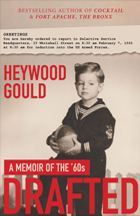
DRAFTED/Part Four

Another Physical

It’s 1963 and the word is out: there’s a war on.
It’s in a small country I’ve never heard of—Vietnam. A former French colony in a part of Southeast Asia, formerly known as Indochina. Previously portrayed in Hollywood Geography 101 as a place where slit-skirt Eurasian beauties seduce world-weary Soldiers of Fortune at the behest of devious Oriental spies.

The French are gone now, worn down by a ten year insurgency , which ended in a humiliating defeat at a place called Dien Bien Phu by a Communist revolutionary named Ho Chi Minh. Ho rules North Vietnam and has launched a guerilla force called the Viet Cong to conquer the south.  All this is news to me.  And to the orators in Union Square Park. They’ve been so busy channeling Mao, Trotsky and Che they didn’t even notice this slight man with his wispy beard and black pajamas creeping out of the jungle.  

South Vietnam is ruled by a family of decadents, druggies, orgiasts and dragon ladies. Christians oppressing Buddhists. Despised by everyone, including its C IA handlers. But they are fighting Communists and JFK launches  an uncertain military adventure to prop up their regime.  His strategists  are anonymous for the moment—the  Bundy brothers, William and McGeorge; Robert McNamara, Walt Rostow, Dean Rusk, William Colby. Soon their names will become anathema. They’ve been sneaking troops and dirty tricksters into Vietnam for over a year. Now the force has reached critical mass and gotten the world’s attention. Peter Arnett, an AP reporter, is  on the scene when American “advisors” suffer their first defeat at Ap Bac. When the dictator Ngo Dinh Diem invades a Buddhist pagoda, slaughtering a thousand monks and nuns. When a monk sets himself on fire to protest Diem’s persecution of Buddhists and sets off an epidemic of immolations across the country.

I’ve been a radical by style, not conviction. I’m good at alienation. I find the role of the disaffected rebel a successful romantic strategy; you can’t get laid waving a flag in Greenwich Village. But secretly I believe Americans are the Good Guys. We provided sanctuary for my grandparents.  Beat Hitler and freed Europe. We gallop to the aid of the oppressed.  Overthrow dictators. Restore democracy and freedom of worship. I get chIlls at ball games. when I hear the Star Spangled Banner. 

Now I’m confused. Are we supporting dictators who kill monks? Who torture dissidents and fix elections? Union Square is a circus, but suddenly, the clowns have become prophets. Morris Krieger, the ancient anarchist in the Florida shirt with alligators chasing bathing beauties, gumming his wife’s cheese sandwiches while he predicts that “Camelot will have its war.” Lonnie, the one-eyed wino in the fatigue jacket, guzzling Gallo sherry and talking about the “secret assassination missions” he undertook in Guatemala and Lebanon for the “Special Forces.” The Nation of Islam preacher who says the war is a plot “to keep restless black men under military control.” The twin brothers with deranged grins who walk through the park talking in tongues and brandishing signs reading USEFUL IDIOTS FOR THE CIA. 

The pimply kids at the Communist Party bridge table, who everybody says are really FBI agents, have a new speaker—a crew cut Southern boy with a US ARMY tattoo, coiling snakes, screaming eagles…

“Who is the most expendable person in the world?” he demands in a strident twang. “The common soldier. They give you forty days of trainin’, but most of that is learnin’ how to make your bed and about face and obey orders no matter how dumb. What good is marchin’ in step and havin’  a neat foot locker when you’re in combat against troops who have  spent years under arms on their own terrain? The Army’ll drop you in the jungle and hope you outnumber the enemy ’cause you sure ain’t gonna outfight him. Oh you’ll get good at it if you live long enough. But you can’t win. You ain’t  fightin’  human beings, you’re fightin’ history…” 

I’m  working as a copyboy at the New York Post. I come in at 8am, just as the trucks are pulling out with the Late City, the first edition. The lobster shift editors and rewrite men shuffle blearily past me  The city room is the size of a factory floor. It fills quickly as the day shift begins. The clatter of a hundred typewriters, the voices calling, the rumble of the presses bringing the news—and I’m part of it.

Every morning I sharpen a few hundred thick, black One H pencils. Make hundreds of “books”–three sheets of copy paper, two of carbon paper for the reporters. Run down to the luncheonette on the first floor for breakfast orders. Saul, the owner, knows everybody’s breakfast; all I have to do is say a name. Run stories from the city desk to the copy desk. Run page dummies to the printers in the composing room. Pick up the galleys from the proof readers. Run up to the mail room to get a stack of the next edition– fifty papers which I deliver to all the offices all over the building, ending up at the 15th floor aerie of the publisher, Dorothy Schiff. The paper changes eight times a day, stories added or rewritten, front page recast, until it is “put to bed” with the “Final Market” edition, which gives the closing prices on the Stock Exchange. On my first day I was told: “everybody in this room is your boss.”  I go on personal errands. Get clippings from the library or the “morgue.” Run last minute headlines or rewrites out to the composing room as a new edition is going to press.  I change typewriter ribbons for lady reporters who don’t want top get smudgy. Make liquor runs; get soda and ice for the editors’ cocktails. Get lunch orders: it’s amazing how these people eat the same lunch every day as well and Saul knows them all. I bolt a turkey sandwich with Russian dressing while I’m waiting. 

At 4:30 I leave work with a copy of the last edition still warm from the press. I’ve got carbon paper and graphite smears on my face, blisters on my fingers from the pencils. If it’s hot I sweated through my shirt and smell myself on the subway. I go to the Cube Steak House on Sixth Avenue for meat loaf with mashed potatoes and baked beans. Spread the paper on the counter and read every word. Then after rice pudding and light coffee with four spoons of sugar I hit the street. Within a half hour I run into someone I know—sometimes it’s even a female. We go to one of the four art houses in the Village to see an old movie. 

It’s not the war. It’s not the capitalist oligarchy. I just don’t want this life to end. 

Curt, the chief copy boy, got himself declared 4F, “permanently unfit for service,” which means they’ll never bother him again.

“Tell ‘em you’re queer,” he says. “My girlfriend gave me a good idea. Polish your nails and then scrape most  of it off so it looks like you were trying to hide it.”

I get the polish, but chicken out at the last minute. Ditto the eye shadow and the cheap perfume.

Selective Service Headquarters on Whitehall Street has  a fortress vibe. Broken pickets are scattered on the sidewalk, along with scraps of signs and a torn flag, the remnants of an anti-draft demonstration the day before. Two Shore Patrol guys (Navy MP’s) stand guard at the door checking draft cards. There are more  non-coms inside, walking up and down the line.

The first time there was silence. Now there is nervous talk in the ranks. One kid who enlisted says the recruiter told him to volunteer for the paratroops. “You get special treatment,” he says. “Plus 16 dollars jump pay the Sergeant told me.”

An older guy in gray-green Army underwear shakes his head. “You won’t make it, you’re too short.” 

Another kid says he and his friend are going in on the “buddy plan” where they’ll get to serve together.

“That’s just a come on,” the older guy says. “They’ll put you were they need you…”

“But they signed a contract,” the kid says. 

“You have no rights in the Military,” the older guy says. “You’re under the Military Code of Justice. Bend over, spread your cheeks and kiss your ass good bye…”

He is approached by two MP’s. “You back again?” He turns away.  “This is a public building,”he says. They tell him to step out.  He refuses. “I wanna see the OD,” he says. “I wanna speak to an officer. I have a right to express my views.” They grab him by the arms. He breaks away. “Don’t fall for their lies,” he shouts. Two more MP”s run down the corridor. They carry him, flailing and yelling: “Don’t give them your lives…Resist…Resist!” Then he’s gone behind a slamming door and we move on in uneasy silence. 

I had stared at “homosexual experiences” on the form for  minutes until a Sergeant prodded me, “let’s go” and then hurriedly checked it off. Every medic along the line sees it and gives me a quizzical look. 

They send me to cubicle at the end of the corridor. A kid brushes by me with his head down. An old man in a white coat, looks over my form, hands trembling. 

“You live in Greenwich Village?” he says with a slight German accent.

“Yes.”

“This is the homosexual quarter, no?”

“Yes.”

“They have special bars with code names, right? A color and an animal means it is a gathering place for homosexuals. Like Pink Pussycat. Or Green Parrot. Right?” He looks up at me with beagle-brown eyes.” Do you frequent these places?”

He’s trying to trap me. “I can’t afford to go to bars,” I say.

He nods, appreciating my answer. 

“So…Do you do fellation?” he asks. 

“What?”

“Do you take a big penis in your mouth?”

Say yes, what difference does it make?

I shake my head.

“Do you like a cock rammed up your anus?” he asks. 

Say yes, for God’s sake, you have to say yes to something.

I don’t…”

“Maybe a fist?” he says. “This was a popular practice in the Turkish forces…”

Can’t do it.

“Foreign objects? In the military hospital we found the most amazing things in rectums…”

“No,” I say.

“So,” he says, tapping his pen on the table. “Sado-masochistic? Devices of restraint and punishment. Whips…Cock rings? Very popular with the SS… Do you know what a cock ring is, Mr. Gould?”

“I uh, am not, uh…”

He looks past me, irritably. A small line has formed outside his door.

“What is the dream of many homosexuals, Mr. Gould…?”

“I really don’t…”

“To be surrounded by young men, correct? To train with them, eat with them, sleep with them, take showers with them. To be at sea with a thousand handsome young men in sailor suits. In other words, to be in the military…Wouldn’t it make sense that some homosexuals would pretend to be heterosexual so they could get into this wonderful paradise?”

“I don’t know…”

He cuts me off, impatiently. “Have you ever considered a career in the theatre? Don’t.”

I rise, sensing the interview is over. The old man writes on my form, saying: 

“The American military has a theory that any young man who is so anxious to avoid military service that he will pretend to be homosexual, should not be given the privilege of serving. So, anyone who walks through my door is automatically exempted. But soon there will be a need for manpower and so the theory will be modified to fit the necessity. In other words—” he waves his pen and says loud enough for the kids outside to hear:

“Next year this little trick won’t work.”

NEXT: A PERFECT JOB FOR A LIAR

DRAFTED/Part Three

A VERY SHORT REPRIEVE
Part 4

Like a condemned man I’ve learned to savor my reprieves.  To relish that moment of bliss  before my misdeed is punished. 

The criminal knows he’ll be caught, but wants the champagne and dancing girls. As a kid I lied about my grades so my mother would let me go out on Friday nights knowing I would be smacked, shrieked at and grounded when I brought my failing report  card home.  I forged her signature on an excused absence note when I “played hooky” to go to “Forty-deuce” to see Madame Olga’s House of Pleasure and eat ten cent hamburgers  at White Castle. I did it on Friday so I would have a glorious weekend and a tranquil Monday before my 8th Grade teacher called on Tuesday to report  the forgery.

“Why was I cursed with such a lying bum for a son?” my mother would cry.

I was unmoved by her despair. The freedom of the “D” train  to Times Square, the taste of fried onions while watching buxom ladies disport in complex lingerie was worth anything she could do to me. 

Now I’ve connived a reprieve from Uncle Sam. I’ve been classified 1Y  by Selective Service, granted a whole year before the System turns it baleful eye back onto me.

A cultural revolution is taking place on MacDougal Street in clubs like the Cafe Wha and Gaslight Cafe. Folk music, jazz, comedy. Bob Dylan, Peter Paul and Mary, Bill Cosby, Charlie Mingus, Lenny Bruce, Jimi Hendrix, even Joan Rivers: every major artist of the next thirty years is getting a start here.  At the San Remo Cafe, the stars of the Boho world are mingling. Ginsberg, Kerouac, Burroughs, John Cage,  Delmore Schwartz, James Agee, Tennessee Williams. Up the block on Bleecker, at the Bitter End,  Woody Allen is opening for Richie Havens. 

I am oblivious to this ferment. I sit for hours at  a window table  in the Cafe Figaro at Bleecker and MacDougal, nursing a hot cider with a cinnamon stick,  smoking Gauloises, playing chess, reading Notes from the Underground–watching the girls go by. Occasionally, there’s a flurry when Burt  the manager throws out a drunk. Burt was kicked off the Cincinnati police force for brutality, although Pierre, a black kid from Cleveland, says that’s next to impossible. “You’d have to eat a motherfucker to get kicked off the Cincinnati police…” Burt punches first, a looping right to the bridge of the nose and issues instructions to the slumping victim– “get the fuck outta my store”–later. 

One night Burt and his tipsy brother Tom, the owner, stand over my table, arms folded. I think I’m about to get the bum’s rush. 

“I guess we’ll  have to hire you if we want our table back,” says Tom. “You can be our new machine man.”

I give notice at the funeral parlor. They take me to Cookie’s Buffet on Avenue M for a farewell dinner. Owning an all-you-can-eat restaurant in Brooklyn is the closest thing to hara kiri the West has invented. People rush the buffet like it’s the end of Yom Kippur.  Veal cutlets parrmigiana are secreted in purses.  Drumsticks are shoved down pants. Steaks are passed through the ladies room window to confederates in the parking lot. The eponymous Cookie stands by the door, blanching under his Miami tan. The place is jammed and he’s going broke. A few months later Cookie’s  burns down after being hit by “Jewish lightning,” a peculiar phenomenon that only strikes businesses on the verge of bankruptcy.

I’m taking a thirty-five dollar cut from $75 to $55, but “machine man” is the the coolest job in coffee house culture. I make espressos, hot cider, cafe au lait in tall glasses, ice cream sodas and sundaes. I taste hazelnut coffee and herb tea for the first time. Plus I eat for free–cheeseburgers, BLT’s, Yankee bean soup, pie a la mode. 

I’m a member of the proletarian aristocracy. I have no money, no resume, but I have cachet. I’m greeted by the important customers, the NYU profs, the freelance journalists, the mysterious old guys at the corner tables who turn out to be blacklisted screenwriters.

Suddenly, I’m a trophy screw. French girls with a few days to kill in New York love my sub basement. “Oh formidable…”  NYU girls like walking the streets with someone under 40 who knows everybody.

I have months of joy. No drudgery, no need for lies or excuses. I’m the “machine man” at the Figaro. I can do no wrong.

One night there’s an awestruck girl from Brooklyn College. “Oh my God, are you actually working in the Figaro?” Her boyfriend wears a tweed jacket and an ascot. He takes off his gloves to shake hands. Very classy. 

He works as an Assistant Make up editor for the NY Post.  There’s been a 114 day newspaper strike and they lost most of their copy boys, he says. The strike is over and they’re hiring. It’s a good time to get in.

“But I dropped out of college to go to Paris,” I say.

“The Managing Editor’s wife is French,” he says. “His name is Alvin Davis. Write him a letter.”

It takes a whole day to write a four paragraph letter. I tell the truth. How I hated college and fled to Paris in the great tradition of Hemingway and Fitzgerald, but  became so fluent in French I was terrified that I  was losing command of English. How I can think of nothing better than working for the paper I grew up reading.

A week later I get a reply. My letter has been jammed into a small envelope with a scrawled note: “Interview, Davis..”

I  put on my black undertaker suit and go to the NY Post building downtown at 75 West Street.  Leonard Arnold, the Personnel Manager  is in a cubicle at the end of the Classified Department.  He’s a gray-haired guy in a brown suit. “You read the Post?”

Every day all my life,” I say. 

“Okay, give me the names of three sportswriters.”

I name the whole department. Even Jerry De Nonno who handicaps the races.

He gives me a one page application. “You’re on probation for thirty days,” he says. “If you’re hired the union will see it to you can make $50 a week for the rest of your life. The rest is up to you.”

“You mean I’m really working for the NY Post.”

“Al Davis liked your letter,” he says. He shakes my hand. “Come in Monday morning.”

I go out to Brooklyn to tell my mother. “I got a job at the Post.”

She gets a worried look. “A real job? Did you lie about college?”

My grandmother is rinsing potatoes at the sink. She stops to wave the peeler at me. “Look, he thinks he’s a big shot already…”

I’m taking a five dollar cut down to $50 a week. and losing my privileged status. No more French tourists for me. But it’s worth it. I’m going to be a newspaperman.

Next morning there is a letter from Selective Service… “You are ordered to report for your physical examination…”

My year is up.

NEXT: ANOTHER PHYSICAL


DRAFTED/Part Three


THE PHYSICAL
Part 3

It’s 1962 and Morris Krieger’s dire warning is ringing in my ears.

“World War III is coming.”

I’m taking my Army physical with several hundred other kids in Selective Service Headquarters off Wall Street in downtown Manhattan. A red faced Sergeant, crewcut bristling, hash marks covering his khaki sleeve, sharply creased blue trousers with a red stripe strides along our line, shouting:

“Strip to your shorts and shoes. Guard your belongings. If you lose your pants you will go home to your mothers bareass naked…”

Krieger, the last anarchist orator of Union Square, greeted JFK’s election with a prediction:

“Camelot will have its war…”

I kept myself awake all night smoking Gauloises to increase my heart rate; chugging Coke to turn my urine brown. Now I’m lightheaded. I stumble into the kid in front of me. He turns with a snarl: “What the fuck’s the matter with you?”

After the Bay of Pigs, Krieger became more strident.

“No one will remember the poor fools left to die on the beach…Millions more will be led to their death…”

I’ve been in high school locker rooms, but have never seen such a grotesque profusion of male flesh. Fat and woebegone, buff and arrogant, slight and timid…Red pustules on white flab, acne clusters, pimples, sores, weird Rorschach bruises. Gray jockeys, bulky boxers with stripes and flowers. The undersized sneak covert looks. The muscled strut and sneer…I try to place myself along this continuum. I am tall, but slouched and narrow-shouldered. I always made the team, but was never a star. I can do sit ups and push ups, but strain at pullups and chins. I’ve fought to defend myself, but have never attacked anyone in anger…

The Russians move their missiles out of Cuba. Krieger scoffs at claims of victory.

“Russians don’t blink. They merely look for another battlefield.

They give us a form to fill out.

“Print clearly,” an older man in a doctor’s white coat says in a German accent. “If we can’t read it you’ll do it again.”

I curse my good health. There’s an endless column of diseases, but I’ve never had one.

The mental disorders are more promising. Bed-wetting, problems in school, visits to a psychiatrist, arrests, convictions, feelings of persecution, sudden eruptions of rage, homosexual attraction…

I’ve been advised I’ll arouse suspicion if I check them all. Just pick one aberration I can defend.

I check “use alcohol and illegal drugs…”

” Word War II was just a sideshow,” Krieger says. “The Tsar and the Robber Baron tried so hard to get Adolph on their side. Henry Ford, Charles Lindbergh, Mosley, Chamberlain, Joe Kennedy, JFK’s dad. If only he wouldn’t be so stubborn about the Jews. Even Uncle Joe Stalin wanted to make a deal. From one mass murderer to another. You keep your camps I’ll keep mine. But Adolph wouldn’t share. So they formed an uneasy alliance to silence his Wagnerian oompah band. And when it was over they couldn’t wait to return to the eternal debate on what is the best way to control a subject population–Communist regimentation or Capitalist exploitation…”

We form a single line and shuffle into a large room, the size of a gymnasium where doctors in white coats are waiting. They are elderly, probably retired, and bored. Stethoscopes are pressed to our chests. “Deep breath…Breathe out.” Lights are shined in our eyes, noses and ears…A tongue depressor is thrust so deep in our mouths we gag. “Say Ahhh…”

Some kids are taken out of the line and sent to smaller examination rooms. They’re the lucky ones, but they walk with heads down as if they’ve been found wanting.

A doctor with a hammer gestures impatiently to a chair. “Well, sit down…” He taps our knees lightly. The kid ahead of me shudders and his knee shoots up. Mine hardly moves. “You waiting for the second feature?” he snaps. “Get up.”

Krieger spots me carrying Camus and Hesse.

“Alienation and mysticism,” he thunders. “The cheap thrills of the bourgeois state. Meant to distract the intelligentsia from its oppression.”

It’s pointless to explain that I use the books to start conversations with girls in coffee shops.

“Drop your drawers,” a doctor shouts. A kid walks up to him. He thrusts his hand under his right testicle and orders:

“Cough.”

Then moves the left.

“Cough.”

And does this a hundred times.

At the end of the room a doctor commands:

“Lean over and press the wall with both hands. Now reach back and spread the cheeks of your ass…Spread ‘em!”

He walks up and down the line looking up every one’s ass.

“Did he lose somethin’?” some kid whispers and we all get hysterical laughing.

We walk into a room with rusty sinks, faucets sputtering, along all four walls. A man in a white coat hands out plastic vials.

“Piss in the vial and bring it to the desk,” he orders.

Another moment of truth as we check out the line of pissing penises. Dark ropes, purple veined monstrosities, fragile pink wands; it’s amazing that they are all the same organ. I am abashed by the larger ones, but not encouraged by the smaller.

After all that Coke my urine rust brown.

The man at the desk hands me a tiny dipstick.

“Stick it in your specimen,” he says. “Show it to me.” He hardly looks. “Dump it in the sink…”

We’re done. Our journey through the rooms has taken us back to the entry hall. A man in a white shirt covered with medals checks my form. Suddenly, I am sorry that I checked off drug use.

“Down the hall to the left,” he says.

A line of kids is waiting outside four offices. We hear snatches of conversation.

“How many times a week?”

“Was there a police report?”

“Don’t give me the letter. Send it to the Draft Board.”

I am steered into an office. An old man with two brown moles, each sprouting a hair, on his bald head looks down at my form.

“Drugs?” he asks.

I nod.

” Heroin? Opium? Hashish?”

“Marijuana,” I say.

He writes in a blank space on my form.

“Drinking?”

“Wine…”

“Sweet wine, dry wine? Beaujolais, Chablis?”

“Italian Swiss Colony,” I say. “Whiskey, too?”

“Rye, vodka, gin…?”

“Scotch,” I blurt.

“What kind?”

I panic. Try to remember the weird-shaped bottle in the sideboard that my father sneaks shots out of while my mother is in the kitchen.

“Haig and Haig…”

He looks up with a smile. “Haig and Haig. Can’t afford that on a private’s salary…”

JFK is sending 16 thousand “advisors” to help the South Vietnamese repel the Communist invaders from the north.

“The Tsar cannot take his army away from oppressing his own people,” Krieger says. “He will use the Vietnamese as proxies. The Robber Baron will send his own young men to keep them from making trouble in the Civil Rights movement and Organized Labor…”

Krieger’s wife comes to keep him company. A wiry old lady with sun-leathered skin, she knits while he rants. Unwraps salami sandwiches and pours coffee from a thermos.

“Were you in the Army?” I ask.

“It was important to defeat the Nazis,” he says. “But I did not support the oppressive military system…”

“He was a good soldier,” his wife says, placidly knitting.

Krieger twitches in irritation.

“I was not,” he says.

Three weeks later I get a letter from the Selective Service System. I have been classified “1Y”, which means I am deferred for a year.

It’s what I wanted. Still, I feel rejected and vaguely ashamed.

NEXT: A VERY SHORT REPRIEVE


IS GENERAL PETRAEUS A MUSLIM?

Igor Yopsvoyomatsky, Editor-In-Chief of ParanoiaIsFact.com
answers readers’ questions

Dear Igor,

I live two exits down Interstate 75 from Gainesville, Florida where that pastor says he’s going to burn the Koran. I don’t mind telling you I’m afraid for my life. My cousin Fred says the Muslims will declare southern Florida Dar al Harb, House of War, and will call the faithful to jihad against us. Fred says that General Petraeus over in Kabul gave the secret signal when he said the Koran burning would cause more troops to lose their lives. Fred says Petraeus is a Muslim agent who sends our boys into ambushes with orders not to shoot back. He says I better haul ass before the suicide bombings start. Is this paranoia or fact?

Petrified,

Culo Raton, Florida.

Dear Petrified,

This is paranoia. The only jihad here is being waged by the mass media–and your Cousin Fred– against your mind.

Let’s look at the facts: An obscure pastor from an unaffiliated fundamentalist church, which claims 50 congregants, announces “Burn a Koran Day.” Does this call resonate? Not yet. As of Tuesday, after weeks of torrential coverage, Reverend Terry Jones had 8,663 friends on Facebook. Lady Gaga has over fourteen million.

Reverend Jones puts up signs on his balding lawn reading “Islam Is The Devil.” Do similar signs sprout up? No. Gainesville is preoccupied with its Downtown Arts Show; the town is buzzing about the start of the Florida Gators football season.

But does this non-event fizzle out? Does Pastor Jones give his party and nobody comes? No again. The ice cream Jesus may be melting in his backyard, but people are lining up in the alternate universe anxious for an invite. Everybody–from the Taliban to President Obama–wants to dance with this new star.

We live in an inverted era. In the past people made the news. Now news makes the people. Never mind that nothing is actually happening. The monomaniacs who have seized power over our lives see this as another opportunity to burnish their tarnished images–flog their flagging agendas.

So New York Mayor Bloomberg, trounced for his ringing support of the Ground Zero Mosque, now acknowledges Jones’s “Constitutional right” to burn the Koran. The man who thwarted free speech by outspending or simply bribing anyone who might oppose him now presents himself as a defender of the First Amendment.

President Obama, who dilutes the power of the Presidency with every quixotic attempt to assert it now urges Reverend Jones to listen to his “good angels.” Does he really think the good Reverend will pay heed to the son of a Muslim?

From his fastness in Kabul General David Petraeus warns the Koran burning will put American lives in jeopardy. Petraeus, the pushup champion of the Pentagon, is celebrated for his counter-insurgency doctrine of “nation-building.” He coined the dictum, “money is ammunition,” and advocates the use of discretionary funds to win the confidence of the indigenous population. In other words, bribe them into not shooting at us.

In the mysterious process of military advancement Petraeus achieved the rank of Major General and commanded the fabled 101st. airborne without ever seeing combat. He is credited with stabilizing the Iraqi city of Mosul, although the majority Kurdish population were strongly pro-American and it took several prolonged operations by Infantry brigades to kill and capture insurgents. Since taking over command in Afghanistan from General Stanley McChrystal, who won the sack race three years in a row at the Joint Chiefs of Staff Potomac Picnic, he has emphasized the need to minimize civilian casualties; although without uniforms everyone is officially a civilian. His Rules of Engagement require troops to identify targets as “combatants” before firing. In other words, eliminate the element of surprise or force protection in combat operations.

The Petraeus Doctrine doesn’t work in Afghanistan. The Taliban are incorruptible, which in the Middle East means they make more money shaking down opium smugglers than the American taxpayer can give them. So Petraeus is looking for someone to blame. First, he tried the Israelis, saying their intransigence, was turning the Muslim world against the US. But when nobody saluted he ran that down the flagpole. Now he has decided to blame an eccentric with no popular support.

On second thought, maybe you should start packing. With all the hysteria that our responsible leaders and our free press have whipped up, Terry Jones might end up with as many friends as Lady Gaga. And then you can bet somebody will decide to do something crazy.

Stay safe,

Igor


IS THE GROUND ZERO MOSQUE A PLOT AGAINST AMERICA?


Igor Yopsvoyomatsky, Editor-in-Chief of ParanoiaisFact.com
Answers readers’ questions.

Dear Igor,

My cousin Fred says the mosque will be a headquarters for the sharia takeover of America. That the Muslims have mind-control techniques that turn weak-minded people like me into suicide bombers and assassins, just like that Major in Texas. He’s like, “all they have to do is play that snake-charming music and you’ll get all hypnotized and walk around like a zombie going ‘alahu akhbar.”” He’s all, “don’t be surprised if you wake up one morning with a towel wrapped around your head and a bomb strapped to your chest and the S.W.A.T team snipers have to take you down in the 7-11 parking lot.” He’s got me so crazy it takes hours for the Ativan to kick in. Is this paranoia or fact?

Scared,

Megiddo, Ohio.

Dear Scared,

It is paranoia. The mosque is a plot, but not against America. It is a desperate attempt by two struggling New York real estate hustlers to scam billions out of the doddering Wahabists who rule Saudi Arabia. They are wrapping themselves in the Koran and the Constitution at the same time. They face Mecca and rattle the rhetorical sabers against the West, while preaching “interfaith dialogue” and the First Amendment in New York. They were close to cashing in when the vengeful God of the Internet, Google be praised, rose against them.

Mosque leader Imam Faisal Abdul Rauf might be the first Sufi slumlord in the history of Islam. He’s the prodigal son of an Imam who raised millions thirty years ago to build the Islamic Cultural Center on Upper East Side of Manhattan. The business model was simple: promise to spread Islam or “Dawa” and the money would roll in. But Rauf eschewed the family trade, getting a physics degree from Columbia, teaching high school, selling insurance and real estate with little success, before declaring himself an “Imam.” He developed a profitable line in the American-Muslim “outreach” and “reconciliation” business. Became an Ambassador of Good Will for the State Department, lecturing, writing–explaining us to them and them to us. The few anti-American remarks he made in the aftermath of 9/11 were understood as a way to maintain his street cred with “them” so he could convince them to like “us.”

Like any ambitious immigrant Rauf speculated in real estate. He bought “affordable housing”, formerly known as “tenements”, at bargain prices. He used his political connections in New Jersey to get “Section 8″ status where the federal government subsidized a portion of the rent, thereby guaranteeing him an income on a minimal investment.

But Rauf failed to maintain his buildings. Tenants complained of rats, bedbugs, vermin, heating and electrical problems, hazardous structural defects. One tenant accused him of being “greedy and only caring about the money.” Another told the Sunday Record that Rauf “doesn’t respect us because we’re non-Muslim.”

Defending lawsuits and bringing tenements up to Code is an expensive proposition. Imam Rauf was stuck with a lot of real estate he couldn’t even sell at a loss.

Enter Sharif el Gamal. Son of an Egyptian immigrant, el Gamal is what New Yorkers call a “knockaround guy.” He knocked around the East Side bar scene in his early life, waiting tables at hot spots, Michael Jordan’s and Serafina, picking up arrests for disorderly conduct and petit larceny until he and his brother Sami discovered the real estate grift. They rented apartments they didn’t represent, collecting deposits they never returned. There were complaints, but the mill of justice ground exceeding slow, giving them time to go to Florida and pick up more residential properties with the help of silent partner, Nour Moussa, nephew of Amr Moussa, Secretary-General of the Arab League. There they continued their thuggish ways, facing court actions for tax delinquency, non-payment of loans and assaulting a tenant.

Back in New York, el Gamal amassed what the Huffington Post called a “modest” real estate portfolio worth over $50 million. When a distressed widow put up 51 Park Place for sale he snapped it up at the bargain price of $4.6 million.

El Gamal told the seller he was thinking about renovating and putting in condos. But that would require millions of up front investment and in the volatile real estate market might take years to show a profit.

A mosque would be an instant windfall. The location, so close to Ground Zero, would be very compelling to orthodox Muslims who wanted to, in the words of Imam Rauf, send out a “call to prayer from the world trade center rubble.” It would have non-profit , tax-exempt status. Money could be raised from donations or from a technique of Sharia banking whereby a bank buys a building for cash and then sells it back in installments to the original seller. Imam Rauf and el Gamal would control $100 million with no oversight from donors. They could take a fee out of every construction contract. They could form companies to do the renovation themselves. The profit potential is dazzling.

Now protests and publicity have put their plans on hold. The NY Post reports that el Gamal owes $229,000 in taxes on the building and faces foreclosure if he doesn’t pay.

Yes, there is an Islamic plot to “enter the crumbling house of the West and hasten its destruction.” But there was also a Communist plot to infiltrate the American government and cause its downfall. And a John Birch plot to take control of the Republican Party. And a behavioral economist plot to prod and coax and nudge you into doing what some academic careerist thinks is best for you.

You should be concerned about the plot by Mega Capital to control your economic life and thus your mind and eventually your spirit. The lords of finance and their Washington lackeys have rigged the system to reduce you to a state of slavering subservience, working for starvation wages, lining up for government handouts. They have made it impossible for you borrow to start a business, get a mortgage to buy property, even have a savings account that pays a paltry 4% a year. In their zeal for “productivity” they have shrunk the labor market through outsourcing and automation. If you’re not working you’re counting the weeks until your unemployment runs out as you despair of ever finding a job again. If you have a job you are probably working twelve hours a day with no overtime just to keep it. You’re afraid to take sick days or ask for a raise or better conditions. You can be fired on a whim.

Turn off that talk radio, Scared. Flush your meds. Join with your brothers and sisters to overthrow the theocrats and plutocrats, the technocrats and bureaucrats who are plotting against you.

But first, throw your cousin Fred out of the house.

Your friend,

Igor

NEXT: DRAFTED: THE PHYSICAL

DRAFTED/Part Three

MY FIRST PHYSICAL
Part 2
MY FIRST TRIP TO WHITEHALL STREET


It’s 1962 and the center is crumbling.

In Centralia, Pa. a garbage dump built over an old coal mine catches fire. The slow burning anthracite under the landfill is ignited and smolders unabated. The town is slowly consumed. The people endure heat, pollution and disease without protest.

In Union Square the Committee to Defend the Cuban Revolution preaches armed struggle against the US. The speakers are young and neat in dress shirts and pressed khakis–some even wear clip-on ties. They look over the heads of the crowd and speak through bullhorns in alien twangs–southern, mid-western.

“Resist the US Imperialist war against Social Democracy…”

An old man, trembling on a cane, warns: “Don’t sign their petition. It’s an FBI trick to get your names.”

A fat kid in overalls jumps off the platform and screams in his face. “All power to Fidel and Che and the brothers and sisters of the Revolution.”

The old man flinches but holds his ground. “Ask them who paid for the leaflets and the fancy loudspeakers.”

Across the park members of the Nation of Islam are handing out copies of their newspaper, “Muhammad Speaks.” Heads shaven, standing at attention in suits and bow ties, they surround their speaker like a Secret Service detail.

“Democracy and integration are the tools of the white oppressor,” he says. He advocates separation of the races and the establishment of black Muslim republics in the former Confederate states.

He is challenged by Mr. McManus, an elderly black Communist, veteran of the Spanish Civil War, who sells his mimeographed autobiography–”Brother Under Arms”–from a shopping cart.

“Segregation in any guise is just a ploy to fragment the working class and thwart the Revolution,” Mr. McManus says.

“Your revolution will never happen, my brother,” the speaker replies.

Mr. McManus’s voice cracks in frustration. “You don’t have the political, economic or military power…”

“Allah will liberate our people,” the speaker interrupts in implacable tones. “Your movement will be a footnote to history…”

Behind the speaker I see Andrew, a kid I’ve known since Brooklyn Technical High School. Just a week before we had split a reefer and gone to the Jazz Gallery to hear Gil Evans. I wave. He stares through me without recognition.

Attorney General Robert Kennedy has announced a campaign to crack down on Organized Crime. He has proposed legislation to make gambling a federal offense.

“It’s a message to the Syndicate,” explains Sal, the bartender at the Park Circle Lanes, across the street from the Brooklyn Riverside Memorial Chapel. “He don’t want them to think they own the White House just because old man Kennedy was partners with the bootleggers.”

Sal has a mountain of prematurely white hair, each ridge carefully tended, over thick black eyebrows and black eyes. He’ll make you a drink, take a number, book a bet, lend you money–anything you want. On Ladies League Night you can’t get near the bar. Housewives on their night out drink Seven and Sevens and Whiskey Sours . “Hey Sal, how come you never bring your wife around?” one of them flirts.

“Why take a ham sandwich to a banquet?” Sal says and they screech with laughter.

Sal’s “gummare” Diane sits at the end of the bar. “Her husband’s upstate on a business trip,” Sal confides with a wink. “An eight year business trip.”

Diane’s got a blonde beehive, wingtip glasses, boobs jutting like cow catchers, capri pants and mules– a style that has tormented me since puberty. She smokes Kools, leaving lipstick smears on the cork tips. She has a way of sucking on the cigarette that drives me to demonic masturbation.

I run back to the chapel looking for a free bathroom and am confronted by an old man in a prayer shawl.

“It’s a shandeh (shame) what’s going on here,” he says.

It’s Mr. Wolfe, a “watcher,” hired by Orthodox Jews to sit all night before the funeral and recite Psalms for the deceased.

“I found a policeman on the sofa,” he says. “Shoes off, gun on a chair, sleeping in the same room as the departed. I asked him to leave and he said the person was dead, he wouldn’t care if Hitler was in there…”

“The cops don’t understand,” I say.

Hashem (God) looks at the sin, not the reason,” Mr. Wolfe says. He digs his nail into my wrist and whispers harshly. “I’m coming here twenty-five years. Police came in and slept. They even brought women. But they never did it in a room with a soul whose fate has not been decided. They had respect for the dead…”

I play the numbers with Sal, a dime a play. With a 500 to 1 pay off I can make fifty bucks if I hit, minus the two-fifty vig. One night Sal slips a five into my hand.

“I’m givin’ you a refund ’cause you’re such a good customer,” he says. “But you gotta do me a favor, okay.” He points down the bar to a swarthy, morose lady staring into a cup of coffee.

“That’s Terry, Diane’s sister-in-law. She brings her in to make everything look kosher. But tonight her car’s in the shop. Could you drive her home.”

In the garage police cars are blocking the station wagons, but they’ve left the keys so I move them out of the way.

Terry is waiting outside the bowling alley. She presses against the door, sitting as far away from me as she can.

“I live on E.19th. and Ave. R,” she says.

She’s silent for a while. She looks out of the window, but I get the feeling she’s watching me.

“Workin’ your way through college?”

“Yeah…”

“Medical school?”

That would be too big a lie. “Dental,” I say.

“My girlfriend Camille married a dentist. Artie Levinson. He’s a good provider. Gave her a mink for her birthday…The family was against it but now they love him. He fixes everybody’s teeth for free…”

It’s a dark street.

“You can pull into the driveway,” Terry says.

There’s a light on in her house.

“My daughter must be home,” Terry says. “She’s starting at St. Francis next year.”

Oh great, I think, she’s going to introduce me to her swarthy, morose daughter. Instead she reaches out and puts her hand in my lap.

“Can you keep a secret?” she asks.

She slides over next to me and unbuttons her bowling shirt. No bra. I almost lose it.

“How old are you?”

“Nineteen…”

“Nineteen,” she says and repeats “nineteen, nineteen,” as if it’s a magic mantra.

I’m usually done before the zipper is down. This time I grit my teeth and think about baseball. But I don’t make it past the first inning.

A few nights later I go into the bowling alley and am greeted by Sal.

“Hey kid, how’s the Revolution?”

I panic. How does he know about my secret political life?

“Revolution?”

“Yeah you know, 1776? Terry says you’re a regular Minute Man…” He laughs. “Now you know. Broads talk, too.” He slides me a triple shot of J&B. “Next time have a few of these. It’ll make you last longer.”

A few hours later I’m puking between cars on the D train to Manhattan. I see a piece of pepperoni from a slice of pizza I’d had a few days before.

At nine the next morning I go downtown to Selective Service headquarters on Whitehall Street. It’s across from Bowling Green where Rip Van Winkle took his twenty year nap There must be a couple of hundred kids. A guy in a khaki uniform is at the door.

“Down the hall…”

We enter a large room with picnic tables. An older guy in a white shirt with a lot of ribbons repeats:

“Take a form and a sharp pencil, find a seat and and fill it out…Take a form and a sharp pencil, find a seat and and fill it out.”

In the front of the room a man with a khaki shirt with red Sergeant stripes and blue pants with a stripe down the middle says in a loud, ringing voice:

“This ain’t the prom, gentlemen. Don’t look for a dancing partners. Just find a place to sit and fill out the form. Answer all the questions. Print clearly and legibly. Make sure you check in the boxes. The quicker you do this, the quicker you get out of here.”

A big, shaggy kid gets up and lumbers toward the door.

“Where you goin’, sir?” the Sergeant asks.

“Lookin’ for the bat’room.”

“Sit down and finish the form.”

The big kid keeps walking. “If I sit down I’ll piss in my pants.”

“If you piss in your pants make sure you save enough for your urine specimen or you’ll have to take the physical all over again.”

The kid sits down.

NEXT: THE PHYSICAL


DRAFTED/Part Three

MY FIRST PHYSICAL
Part 1
A NOTE FROM A SHRINK

It’s 1962 and I’m in a boho Garden of Eden.

I live in a sub basement in Greenwich Village. “The coolest place in the world,” my friends from Brooklyn say.

The super lets me tap into his electricity and use his phone. His wife takes messages for me. “You should call your mother,” she says. I feed his two cats. They kill mice and leave them outside my door.

I never take cabs or go to fancy restaurants. I live on diner food, peanut butter and jelly and chocolate milk.

Won’t go north of 14th. Street. Except to Birdland on 52nd. where I pay $1.25 admission to see the greatest jazz musicians in the world–Dizzy, Miles, Count Basie, Gerry Mulligan, Sarah Vaughan–every week another genius.

Don’t go on dates. My friend David lives in a four story walk up in the Flower District. I’m so stoned the trip up the stairs seems to go on for hours. We sit in the dark and watch the light on the amplifier blink in synch with Wanda Landowska playing Bach partitas. The door swings open. Female silhouettes appear, then disappear as it slams shut. Something warm slides in next to me. A wisp of hair brushes my cheek.

There hasn’t been a war in nine years, but the orators of Union Square warn of world cataclysm.

“Satan has been released from his thousand year captivity,” a skinny old woman shrieks in a dense German accent. She sits under a bed sheet with “TURN TO JESUS” scrawled in lipstick. ” Gog and Magog have gathered the minions together for war,” she says. “They are as numerous as the sand in the sea…A great multitude will die untested. Only the righteous will be saved…” Brandishing a dog-eared Bible she cries: “Turn to Jesus now before it is too late.”

Across the park Morris Krieger, the anarchist, invokes Randolph Bourne:

“War is the health of the state,” he says. “It sets in motion the irresistible forces for uniformity. It coerces into obedience the exploited minorities and the individuals who are straying from the herd.” He stops and walks through to the crowd to where my friends and I stand, dazed with marijuana and Italian Swiss Colony muscatel.

“Democracy is an excuse to excite the masses,”he says. “Pursuit of happiness? Only the happiness they allow you. The happiness of acquisition and slavish obedience, the happiness of sycophancy. You have found happiness outside of their system through drugs and interracial fellowship. You are a threat to the state.”

A few benches down, a kid strums a guitar and sings in a Woody Guthrie whine:

“The General needs his War

To get that extra star.

Ford needs a war

To sell his armored car

JFK needs a crisis ’cause his New Frontier’s a lie

He ain’t never gonna give poor folks

A slice of the pie.

The doomsday warnings are comic relief for the drunks and the junkies lolling on the benches. Workers on lunch stop to heckle the speakers before returning to the grind. Even the cops shake their heads indulgently.

Meanwhile, the date of my physical looms.

“My shrink will give you a note that will get you out,” David says. “It’ll cost you thirty-five bucks for the visit.”

The office is on the ground floor of a building on Riverside Drive. I look at the names on the plaques and find: Dr. Paul Fruchtman. He’s at the end of a warren of tiny rooms. Doesn’t look much older than me. Short in a brown suit with a soft handshake and a few strands of hair across his bald head. He sits in an armchair, almost brushing knees with me and lights a pipe upside down so the window fan won’t blow it out. I stare at it wondering how he keeps the ashes from falling.

“Why don’t you want to go into the Army?” he asks.

David has told me he wants a crazy, radical answer.

“I don’t want to serve a state that exists to perpetuate the power of the capitalist oligarchy,” I say.

He scribbles on a legal pad on a clipboard.

“Do you worry about being in close quarters with other men?” he asks.

He wants me to say “yes.” To admit to being a latent homosexual. It’s a lie that will get me out, but I can’t tell it.

“No,” I answer.

“Are you afraid you might be killed?”

Another “yes” is indicated here. Another lie I can’t tell.

“No…”

He sits back, puffing on his upside down pipe.

“Tell me the truth. What is that worries you the most about being in the Army?”

I give him my first honest answer.

“Making my bed.”

He leans forward, eagerly. “Making in your bed?”

“No, just making my bed,” I say. “My father says they punish you if they can’t bounce a quarter off your blanket. Also, folding my clothes. I can’t really fold my shirts. My mother always yells at me. Sewing, too. My father says you have to sew your stripes on your shirts, he calls them blouses. We had to sew our own shop aprons in sixth grade and I couldn’t do a hem stitch and had to get one of the girls to help me…”

He raises a hand to stop the torrent.

“Okay, I’ll give you a note that you’re in treatment with me and aren’t ready for the stresses of military service. That will give you a temporary deferment, known as a 1Y. After a year they’ll call you again and I can renew the deferment.”

I rise, relieved.

“Of course there’s one condition,” he says, relighting his pipe. “You’ll have to continue in treatment with me.”

“You mean, be a patient?”

“Yes. Once a week should be enough.”


It’s a shakedown. He gives me a bland smile. “You’re in limbo” he says.” You can’t make the transition to productive, responsible adult life. As you get older that can become very serious.” He hands me a form. “Fill this out and bring it back” —he checks his calendar—”next Thursday, same time…You can pay Miss Rubin at the front desk.”

Miss Rubin is whispering urgently into the phone. I glide by without paying.

I can’t go out that night. The super’s cats creep through the window yellow eyes glowing in the dark. I see endless rooms of green filing cabinets. Echos of doors clanging shut. Clerks shuffling past each other down dusty aisles. A thick manila file with my name on it is dropped on a pile of files…Carried to another room. Dropped on another pile. Handed to a man in a baggy, gray suit.

He’s out there now. In a dark doorway across the street. People hurry by him with their heads down, each followed by a man in a baggy, gray suit.

NEXT: MY FIRST TRIP TO WHITEHALL STREET


DRAFTED/Part Two Con’t

I AM HELD HOSTAGE BY THE MOB
Part Two
ARTIE’S AMAZING STORY

One shiny suit takes my car keys. The other pokes me with a hairy finger.

“Go.”

They walk me down a dark, narrow ramp, bumping me back and forth between them. My legs buckle, my mouth goes dry. They breathe hard like they’re angry. I am sickened by the sour combo of coffee, cigarettes and Bay Rhum. Are they taking me somewhere for a beating? Or will I just get the hard smack to the back of the head I’ve seen shiny suits give guys outside Tony’s candy store on Tenth Avenue?

They knock on a steel door under a naked bulb.

“Artie, you in there…?”

From inside comes a hoarse grumble. “No, I’m ringside at the Copa.”

Another poke. “Get in there…” And they take a few steps back to make sure I enter.

It’s the embalming room. Only one table, we have four at Riverside. Our embalmers work with white coats, which are left unlaundered until they look like butchers’ aprons. The man I see squinting over a body, cigarette dangling between his lips, is wearing a frayed, gray sleeveless undershirt. He’s wiry and darkly tanned. Blood under his manicured fingernails, a gold watch rolled halfway up his tendoned arm over a tattoo of snakes and eagles and blurry letters…A pencil thin mustache, a pile of black hair, combed into a glistening pompadour.

The body has had a full autopsy –scalp peeled off to reveal the brain; skin parted along the chest cavity, from the stomach to the clavicle. He points derisively at the door. “Tough guys” he says. “They’ll split your skull with a two-by-four and eat a bowl of macaroni, but they won’t go near a deceased…”

There’s a body on a gurney in a corner. The toe tag says. “Gendelmen.”

“That must be yours,” Artie says. “We don’t get Jewish jobs.” He brushes his finger across his nose. ” Only the nice people get buried here, know what I mean?” And points to the body on the table. “Almost every job we get the cops order a full post mortem to make sure it wasn’t a homicide.”

He flips me a crumpled pack of Camels with traces of dried blood around the edges.

“Relax, you might be here for awhile. You got in the middle of a bad beef. Red Hook versus Bensonhurst.”

“But it’s only about fifteen bucks,” I say.

“Jurisdictional dispute,” he says. “Mangelli’s like a housefly on a pile of shit. He don’t know where to go first, you know what I mean?”

I don’t, but I nod anyway.

“He might be a big shot on President Street, but he’s nothin’ here, know what I mean? So now he gets caught with his hand in the wrong cookie jar. And now you’re the pawn in the game. Jungle drums are bangin’ as we speak. Everybody in Brooklyn knows what’s goin’ on and they’re watchin’ to see what he does. If he sends the fifteen bucks to bail you out it means he backed down. So now he’s callin’ people, you know important people, so they’ll call other important people to make Big John let you go.”

I light a Camel and try not to cough. Artie blows smoke through his nose without taking the cigarette out of his mouth. A long ash drops into the chest cavity of the body on the table.

“The big shots live for this kinda shit,” he says. “They got nothin’ better to do, but sit around watchin’ the money roll in. So now they’ll get all jazzed up talkin’ back and forth. They might even have a special sit down about it. Give ‘em an excuse to go eat spaghetti. Get treated like big shots at some joint downtown. This could take all night. “

Once, on my first day in a new school, three kids pushed me into a clothes closet, laughing as I thrashed desperately in the darkness. I have that same feeling now.

“How old are you kid?” Artie asks.

“Nineteen.”

“Get your draft notice?”

“I gotta go for my physical.”

Artie scoops up a handful of viscera and drops it in a cellophane bag. “Don’t tell ‘em you worked in the business. They’ll put you in Graves Registration and you’ll never get out.”

A phone rings. He jabs an extension button and answers. Looks at me.

“Yeah, yeah,” he says.

He hangs up. “What was I talkin’ about?”

“Graves registration,” I say.

“Oh yeah, you wanna hear what happened to me?” He continues before I can answer. “It’s ’41, I’m lookin’ for pussy. I’m a smart guy, don’t shit where I eat. So I go to a dance outta the neighborhood in Prospect Hall. Pick up a little guinea broad, Caroline…Hot to trot, you can tell by the way they sock it into you when you’re dancin’. Coupla slow Foxtrots and we’re in the back seat of my brother’s Plymouth. Coupla months later three guys show up at my uncle’s place where I’m serving my apprenticeship—Sabbatino and Sons, ten funerals a year, he’s gonna make me a partner, I’m set for life…Caroline’s knocked up, they tell me. Not by me I say, I used a bag. Bang! they smack me. You callin’ my sister a hooer?”

Artie is talking fast in a whisper, as if he wants to get the story told before someone catches him.

“So my uncle brings me here to Big John— not this one, his father. Don’t worry, I know the family, he tells me. It’ll cost you a coupla dollars. And you oughta get outta the neighborhood for a while. Join the Army. By the time you come back everything will be blown over.

“You gotta do what these guys tellya so I enlist. They send me to Governor’s Island. I set up a morgue. It’s a picnic. I don’t even embalm, just ship bodies back to their home states. I’m home for Sunday dinner every week…

“Then guess what happens?” He smacks himself in the forehead. “Pearl Harbor. The war, you believe this? So guess what: they got plenty of guys to shoot rifles, plenty to type orders or drive trucks. But what they don’t have is enough undertakers to take care of the bodies that are pilin’ up all over the place.

“See, these generals, they’re like the big shots around here. They sit around drinkin’ highballs in the Officer’s Club for twenty years and all of a sudden there’s a war and they come up with ideas. Like now they gotta have a clean battlefield. It’s bad for morale to see bodies lyin’ around. And that means work for me…”

The phone rings again. Artie picks it up. “Yeah, yeah, okay.” He hangs up and lights a another Camel.

“I was in every theater, kid. Startin’ in Morocco where we had to dig bodies outta the sand…In combat you gotta bury guys where they fall…We’re duckin’ ordnance in the desert Messerschmitts doublin’ back to strafe the field…Then we went across to Sicily. General Bradley used to check to make sure the battlefield was clean, you believe that. We had to bury the Krauts, too…Some days we had to duck into the graves with the bodies when they counter-attacked…Gotta pick up the guy’s tags, plus any personal items he might have. Make a note of tattoos or scars or any identifying marks…That’s where I got the tattoo…See this? AFGRREG. Know what it stands for? Artie Fiore Graves Registration. So just in case they blew my head off they would know who I was and could send my wallet home to my mother…

“They sent us into England and we thought our war was over, see, after all that time in combat. Instead, we go over on D-day and hit the beach a few hours after the landing. Corpses floatin’ in the water—everywhere. We take fire but we get the beach cleaned hours after we hit. Did we get a medal, did we even get a commendation? Nothin’…See, they didn’t want to remind the homefront that people were dyin’ over there. They made these little films they showed in the theaters about every thing the Army did. But nothin’ about Graves Reg…”

The phone rings again.

“Yeah, yeah,” Artie says. “C’mon kid, that little prick Mangelli folded and sent the money.”

Artie puts a sheet over the body. He slips into a white-on-white shirt hanging over the door. Ties a fat Windsor knot in a shiny silver and green tie. “Take your body, kid.”

He guides me through a dark maze to the garage, lighting one Camel off another, talking even faster.

“’45, VE Day. War’s over right? But not for me. They keep us in to set up morgues in Japan for the Occupation. Then, in ’46 when I think I’m finally gonna get my discharge they come in with this shit detail: MacArthur wants to find the remains of the guys who died on the Bataan Death march. We been handpicked because we got so much experience. So we get rewarded with flies, and crud and fireshits for another three months. That’s what they do. They take the best guys and they run ‘em ragged. Like recyclin’ guys back to the front to break the rookies in. See, you can’t let ‘em know you’re good at anything…”

He watches as I horse the body bag into the back seat of station wagon.

“October ’46, I’m out. I had more than five years in. I come back here and they do me a big favor. Gimme a job in this joint. Same thing. They know I’m good so they abuse me. Let’s get your keys…”

In the office the big guy with glasses on his bald, yellow head, hands me an envelope.

“Give this invoice to Mr. Mangelli…”

A silver suit flips me the car keys. Another needles Artie.

“Hey fruitcake, where you goin’ all dressed up?”

Artie winks at me like he knew this was coming. “I’m goin’ to your mother’s house for dinner…” He waves the cellophane bag of guts in the guy’s face. “I’m bringin’ the tripa…”

The silver suit recoils. “You sick bastard. Get back in your hole…”

Artie laughs. “Everybody’s a tough guy…”

He turns to me.

“Remember what I tole you, kid. Don’t tell ‘em nothin. Don’t tell nobody nothin’.”

NEXT: MY FIRST PHYSICAL


DRAFTED/Part Two

I AM HELD HOSTAGE BY THE MOB


It’s 1962. Uncle Sam has been threatening me with fines and imprisonment if I don’t report for my Army physical. Now he suddenly grants me a reprieve. I get a letter from the Selective Service Agency postponing my examination for sixty days.

“The System rules by caprice,” explains Morris Krieger, the Anarchist sage of Union Square Park. “It maintains power by keeping the people in a constant state of anxious uncertainty…”

Willie Mangelli, night manager at Riverside Memorial Chapel on Park Circle in Brooklyn, has a different take.

“You moved to Little Italy, right? All them big shots down there are bribin’ the Draft Board to keep their kids outta the Army. They gotta juggle the exams to make sure they got enough people comin’ in so it won’t look suspicious.”

Willie is a big shot himself. He has a “Hialeah tan,” wears a silver suit that almost glows in the dark and lights his cigars with a gold Dunhill. He’s not a licensed funeral director, but he’s the business agent of the limo driver’s local and the rumor is the owners gave him the job to avoid a strike.

“He’s gotta have some income to show the Government,” a driver tells me proudly. “He’ll be outta here as soon as his accountant tells him the coast is clear.”

Morris is a retired baker, whose union pension after thirty-seven years is $42 a month. He’s saving up from his Social Security to get his hernia fixed. “The Revolution is only a lifetime away,” he tells me and proudly quotes Emma Goldman:

“Anarchism stands for direct action, open defiance of and resistance to all laws and restrictions, economic, social and moral.”

Willie turns the chapel into his private criminal enterprise. In the morgue he buys “swag” watches and jewelry from furtive men in windbreakers. Out in the parking lot he sells the swag to men in Cadillacs who squint at his “goods” through jewelers glasses, pass him envelopes and drive away.

Willie runs a “Bankers and Brokers” card game in the garage. The “broker,” the player, has to beat the “banker’s” card–ties go to the banker. It’s quick and simple and fifty-one people can play. The deck is reshuffled and recut after every hand. Spiro, the “banker” crimps the deck so he can always cut himself a high card and raise Willie’s winning percentage.

Morris claims he takes his credo from “the great theorist Max Stirner” who wrote:

Whoever knows how to take and defend the thing, to him belongs the property.

He sells Anarchist books from a bridge table in Union Square. “Two dollars,” he says, but quickly adds, “or anything you can contribute.” And gives half his inventory free to people who plead poverty.

Morris and Mildred, mother of his two children lived for thirty years in “natural law,” he says. But they had to get married in order to make Mildred his beneficiary. “The state made sinners out of us,” Morris says and quotes “the great thinker” Prince Peter Kropotkin.

“Why should I follow the principles of this hypocritical morality?”

One night we are shorthanded and Willie has to come out on a “removal” with me. He throws me the keys–”you drive”–and grumbles “I can’t believe they got me workin’.”

We go to a tenement on Blake Avenue in Brownsville and walk up four steep flights of creaking steps. In a fetid bedroom an obese young woman is sprawled face down on the floor, her nightdress hiked up over huge, mottled thighs.

“She’s a fuckin’ whale,” Willie mutters.

“Why couldn’t it have been me?” her mother cries.

Willie puffs furiously on his cigar. “Stinks in here. Open a windah.”

He curses as we wrestle the corpse into a body bag.

“You take the head,” he tells me as we steer the gurney through the narrow doorway onto the landing.

“Drop your end, we’ll catch the express,” he says.

He kicks the gurney down the steps. It bounces and rattles and tips over. A swollen purplish, foot flops out of the body bag. A man pops out of his doorway.

“Have you no respect for the dead?”

“You wanna give us a hand, Rabbi?” Willie says.

The man steps back into his apartment.

“Yeah, that’s what I thought,” Willie says.

Morris has scars where he was beaten by gangsters and cops. He quotes Max Stirner: “One goes further with a handful of might than with a bag full of right.”

It’s a busy week. A mysterious blight is killing the chickens in Connecticut and New Jersey. The chicken farmers are killing themselves in Brooklyn.

A fifteen year old boy is found hanging in his shower, girlie magazines strewn on the floor. It’s called a suicide, but the Medical Examiner says the kid was probably choking himself to enlarge his erection.

We can’t leave bodies laying in their homes so we hire other undertakers to move them for us and then we pick them up at their parlors. Willie pays fifteen dollars for a “pick up” and takes a three dollar kickback for himself.

I hear him on the phone.

“I get the three beans from you or I get it from somebody else.”

Willie likes to pay with exact change, but he only has a twenty. “Be sure you get eight bucks back,” he tells me. “Five bucks change and three commission.”

I go to the T……….a Funeral Parlor on Avenue U. Two men in the same shiny suits that Willie wears are sitting in the lobby.

“I’m here to pick up a body,” I say.

They take me to a tiny, windowless office where a large, man with horn-rimmed glasses perched on a jaundice-yellow scalp, gives me a baleful look.

“It’s been two hours. What took you?”

“We’re busy,” I say. “Seventeen funerals…”

“Seventeen? You givin’ away toasters down there?”

I hand him a twenty.

“You’re short,” he says.

“It’s fifteen dollars for a pick up,” I say and invoke the magic name. “Mr. Mangelli arranged it.”

“Mr. Mangelli gave the wrong price to my night man,” the large bald man says.

The two men in the silver suits push into the room behind me and close the door.

The large bald man shoves the phone at me. “Get Mr. Mangelli on the phone.”

They find Willie at the bar of the bowling alley across the street.

He answers gruffly: “Whaddya want?”

The bald man snaps the phone out of my hand. “Gimme that…” And growls: “Know who this is jerkoff? Think I don’t know what you’re doin’? You’re payin’ fifteen and puttin’ in a thirty-five dollars expense chit. You think you’re gonna make twenty bucks off me, you fuckin’ little chiseler?”

I am shocked to hear someone call Willie Mangelli a “fuckin’ little chiseler.”

There is a muffled tirade at the other end.

“I’m holdin’ your body, your wagon and your guy,” the large bald man says. “Send the fifteen bucks up here and I’ll let ‘em go.”

Another tirade.

“Call anybody you want,” the large bald man says. “Call the fuckin’ pope…”

I feel a hard hand on my arm.

“Take him downstairs,” the large bald man says.”Let Artie the fruitcake babysit him.”

NEXT: ARTIE’S AMAZING STORY